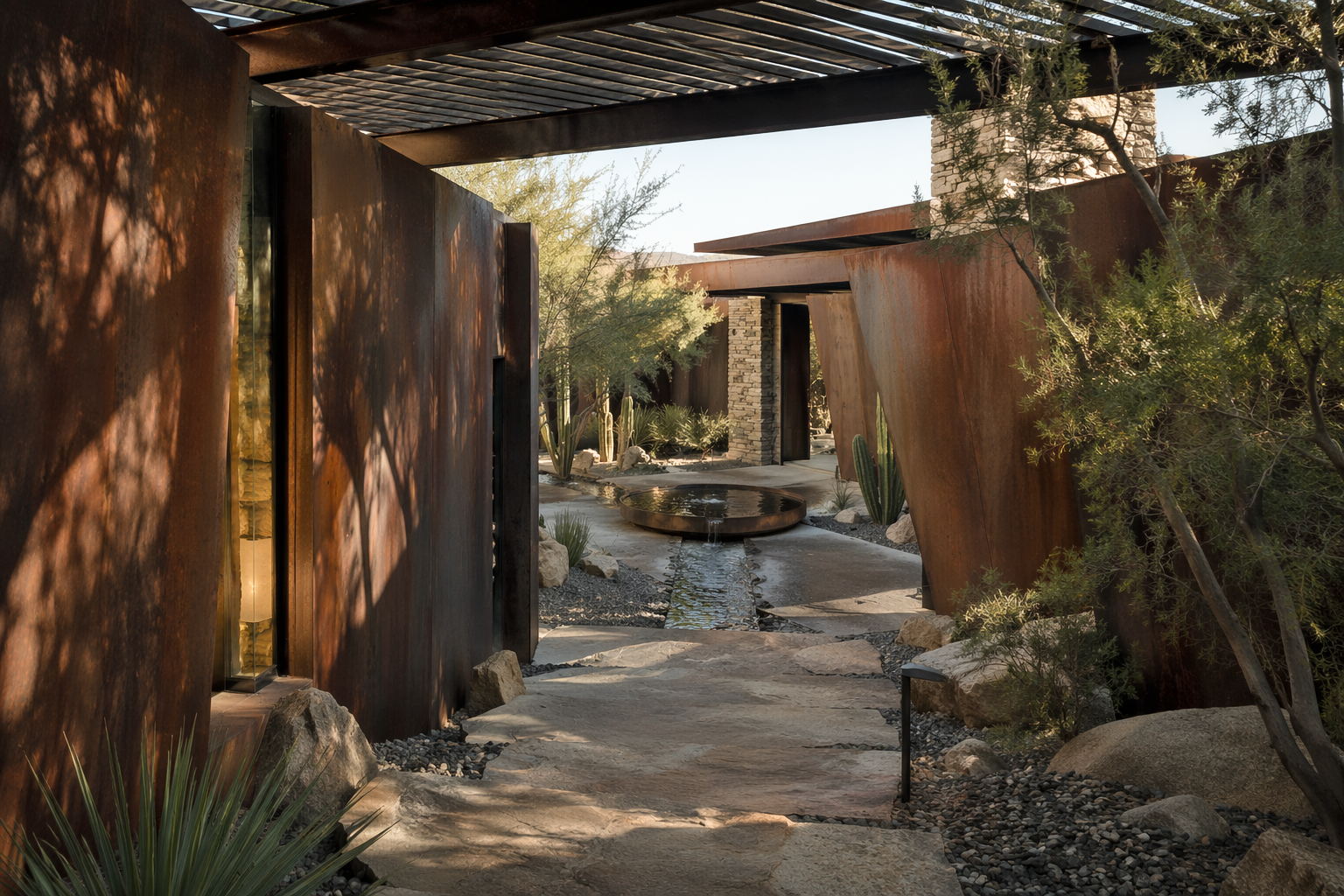
Material gives architecture weight, texture, and memory. Through careful selection and detail, it reveals how a building is made, how it meets the body, and how it changes over time. There is deep beauty in materials that are allowed to express their surface and character honestly.
material
01
Mass
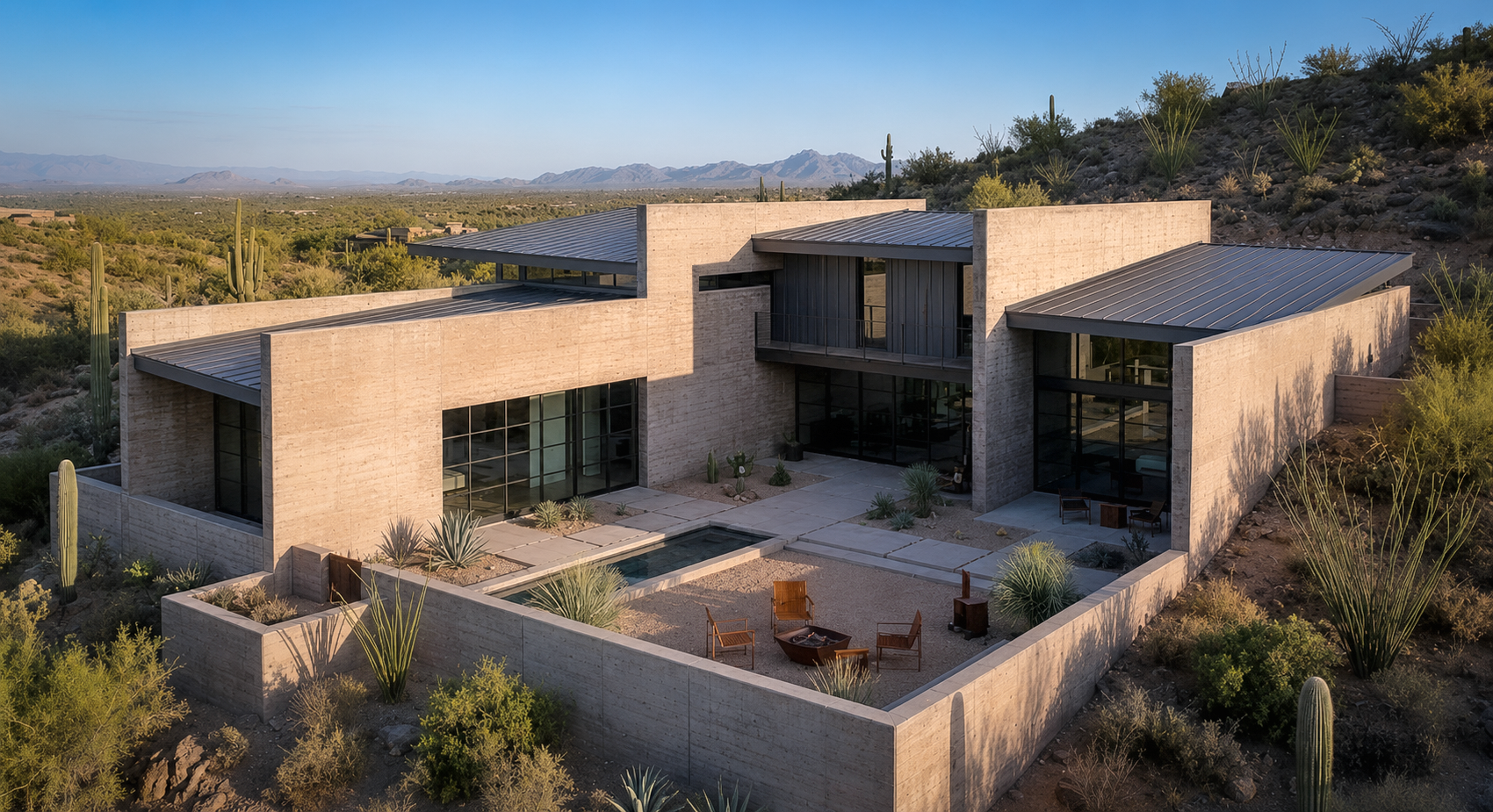
Weight is felt before it is seen. A thick wall, a heavy lintel, or a stone plinth, gives architecture a sense of permanence and anchors the building to its site. Mass creates shelter not only by enclosing space but by making the body feel held.
02
Texture
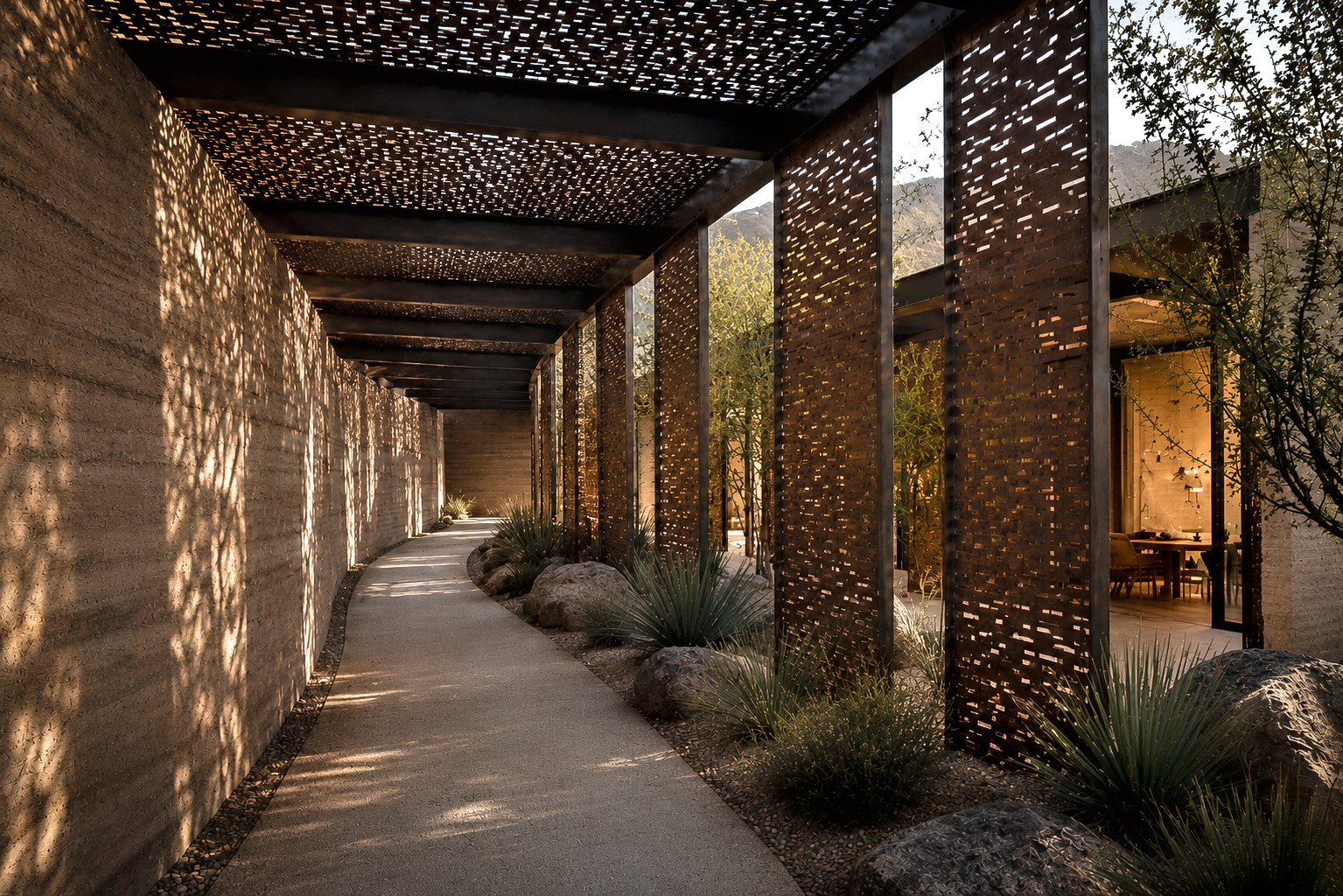
Texture is how material speaks at close range. Board formed concrete, satin finished wood, and hand laid masonry carry the memory of making in their surface. The marks and irregularities catch light differently, invite touch, and give architecture an intimate scale.
03
Structure
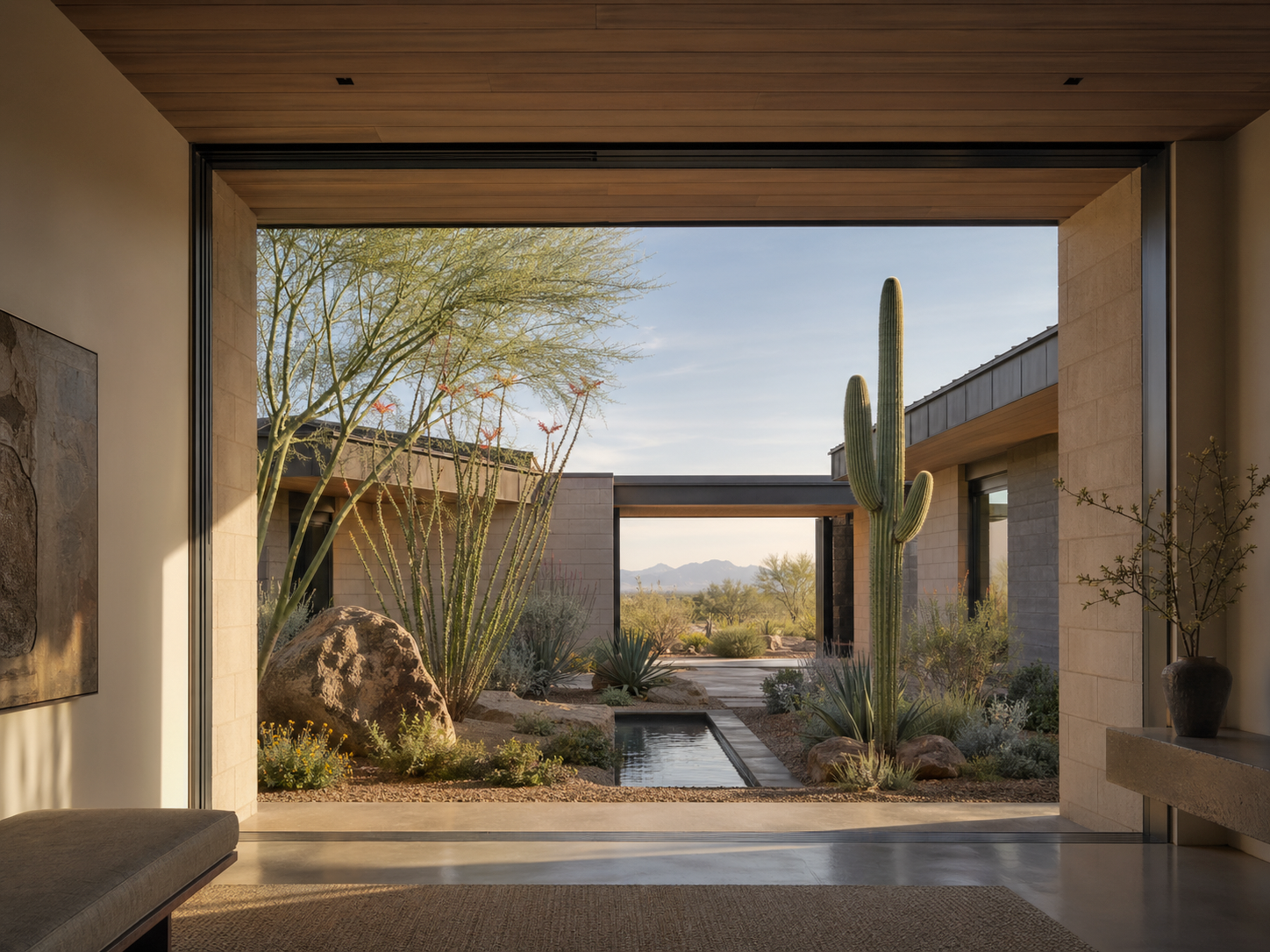
Structure is the quiet logic embedded in the design. When beams, columns, and joints are allowed to appear as part of the material language the building begins to explain how it stands. Tectonic clarity gives construction presence and turns necessity into architectural expression.
04
Weathering
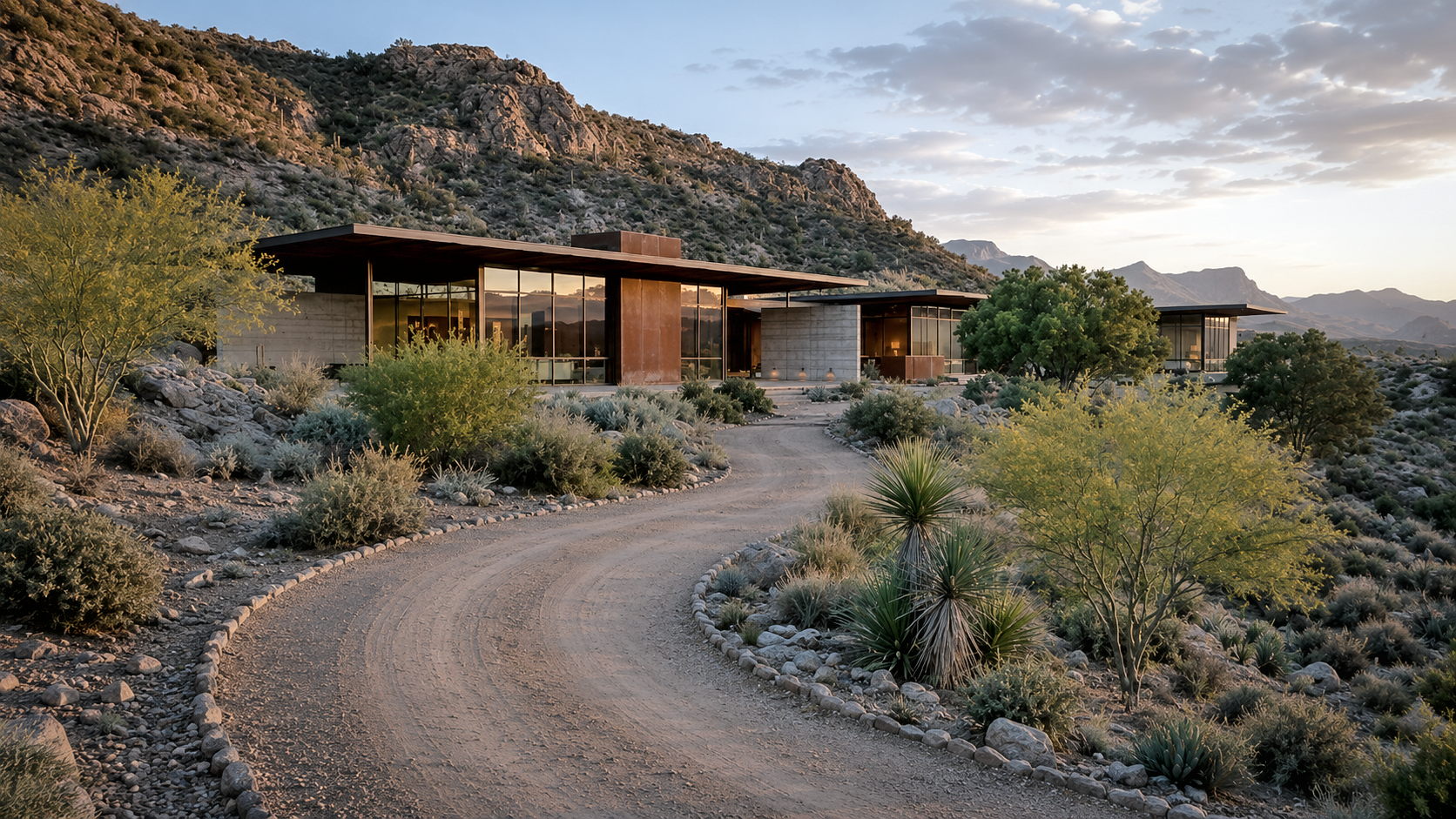
Some materials are chosen for how they age. Patinated copper, weathered steel, aged timber and stone do not resist time so much as record it. Their surfaces gather memory and character allowing the building to deepen rather than diminish through time. To use them well is to design not only for completion but for the decades that follow.
05
Detail
Detail is the smallest scale at which the whole building can be understood. Connections, joints, and reveals are invisible when resolved with elegance and impossible to overlook when they are not. A line that meets cleanly, a shadow that falls correctly, and a joint that feels inevitable, can carry the discipline of the entire work and convey the thoughtfulness in the design.